
Debt Management Guide For New College Students
Attending college is an important step towards securing one’s future. It can increase a person’s chances of employment and raise one’s salary potential. Unfortunately, there are problems that often threaten an individual’s ability to attend or continue attending college. One wide spread threat is a lack of financial resources. Financial problems may arise due to the cost of one’s tuition or as a result of increasing expenses associated with college. There are ways, however, that students of all ages can find, raise, or save the money that is necessary to continue and complete their higher education.
Grants, Scholarships, & Loans
Most often, students attending college seek some form of financial assistance in the form of a loan, scholarship, grant, or some combination of the three. Scholarships are gifted by various entities and organizations, including religious groups, schools, for-profit, and non-profit companies, one’s community, and more. A person may earn a scholarship based on his or her skills, such as playing a certain sport, or for academic achievement. Grants may be federal, state, or institutional, and are typically awarded based on one’s financial needs. When a student receives a grant or scholarship, he or she is given a financial award that is the equivalent of free or gift money. This means the student is under no obligation to pay back the awarded money, although he or she may need to continually to meet the outlined terms or obligations associated with the grant. For example, a student who drops out of college or fails to finish his or her period of enrollment may be required to payback their grant in full or in part. Because they do not need to be paid back if the student completes college, they help students save money that would otherwise need to be repaid on a student loan. In addition, grants and scholarships help students save money by helping them pay for tuition, supplies, and even housing and transportation.
A loan differs from scholarships and grants in that the student must pay the money back, along with any accrued interest. A loan may be from a private lender, such as bank, or it may be a government or federal loan. Often, federal loans are less stringent than loans from private lenders, in terms of repayment and interest rates. It’s important to note that because students must pay off the loans with interest, it is important that they borrow no more than what is necessary to successfully accomplish their educational goals, as loans place students in debt that can take years to pay off.
Work Part Time
Working is another option when it comes to paying for the many expenses associated with attending college. For many students, it is necessary to seek part-time employment while attending college, and federal work-study programs are one way of accomplishing that. These are programs for students who attend college either on a full or part-time basis. It is offered by participating colleges and universities, and the available jobs are either school-based or of public interest for non-profit organizations. Depending on the school, students in the program may be employed part-time by for-profit companies. These jobs, however, must be relevant to the student’s course of study. Internships are also a way to earn money while attending college and to gain experience with a potential future employer at a company of interest. Students must be careful when looking into internships, as many are unpaid and offer work-experience and references only. In addition, the competition for internships is often fierce. When applying for jobs outside of work-study programs, students should search for jobs that are not overly stressful and avoid working too many hours, so that it won’t interfere with study. Good choices for part-time jobs are those in which the student has some experience or that relate to his or her field of study.
Extra Ways to Save
There are additional ways in which students can save money, regardless of whether or not they have a loan, a grant, or work part-time. Creating a budget and being more frugal when spending money can go a long way when it comes to saving. When it comes to entertainment, the library is a great resource. Not only can students check out textbooks, but also books for leisurely reading. Many public libraries also have movie rentals at no cost as well. Even paying for rented movies can decrease one’s expenses, if renting replaces frequent trips to the theater or the expense of cable television.
- When making plans with friends, look for activities that are free or low-cost.
- Packing a lunch and eating dinners at home will save money as opposed to eating out regularly.
- Students can cut back on Internet costs by taking advantage of free online access at coffee shops and in libraries.
There are ways to save when it comes to transportation as well. If possible, students may forgo purchasing and driving a car, opting to take advantage of public transportation or ride a bicycle instead. Although cars are convenient, the cost of car insurance, a car payment, parking, and gas makes it a far more costly means of getting around. Another area where students may cut their expenses is in the purchase of personal items. Instead of buying new, students may consider purchasing second-hand items that are clean and gently used. Even physical fitness can be expensive when gym memberships are involved. Replace them with outdoor activities, such as jogging, that require no paid membership at all.
- Student Tips: How to Save Money
- Money Saving Tips for College Students
- Students Look for Ways to Save Money in Tough Times
- How Students Can Save Money in Tough Economic Times
- How Can You Save for College?
- Six Strategies for Paying College Tuition Beyond Loans
- Money Management – Twenty-Nine Money Management Tips Every University Student Should Know (PDF)
- Employment While Attending College
- Talking Money with Your New College Student (PDF)
- Ten Tips on Paying for College
- ABC 7 Chicago: College Financial Aid Tips for Parents and Students
- Financial Aid Tips (PDF)
- Twelve Tips on Paying for College in Tough Times
- Tips for Paying for Your College Education (Video)
- Tips for Paying for College Minimal Debt
- Paying for College? Try These Tips
- Creating a Budget
- Money Saving Tips for College Students! (PDF)
- Pay for College Without Taking on Student Loan Debt
- College Students Work Longer Hours to Pay Their Bills
 For many students, the prospect of paying for their education can be daunting and even terrifying. The price of college tuition has skyrocketed over the years. But, that doesn’t mean that a college education is out of a student’s reach, no matter what their family income. Each year, millions of students receive financial aid that allows them to pay for the cost of school. There are two forms of financial aid: free and not free. Free aid includes grants and scholarships. Aid that isn’t free includes student loans, which need to be paid back, with interest. It’s in the student’s best interest to get as much free aid as they can.

 Education after high school is highly competitive and rigorous, which is why colleges, universities, and graduate schools require testing to prove that students are capable of handling the pressures of undergraduate and graduate work. Undergraduate education usually consists of students trying to achieve associates or bachelor’s degrees, whereas graduate education includes students who have bachelor’s degrees and want to achieve their masters and/or doctorate. Undergraduate admission exams consist of two test, the Academic College Testing (ACT) and the Scholastic Assessment Test (SAT). Scores to these tests often help determine admission into college and possibly the type of financial reward or aid that a student is able to receive. Graduate admission exams include the Graduate Record Examination, or the GRE, an exam that reviews a student’s knowledge gained during undergraduate education. Other tests like the GRE exist but have a focus on a certain field including test such as these: the Graduate Management Admission Test, or the GMAT, the Law School Admission Test, or the LSAT, the Medical College Admission Test, the Pharmacy College Admission Test, or the PCAT, the Dental Admission Test or the DAT, and the Optometry Admission Test, or the OAT.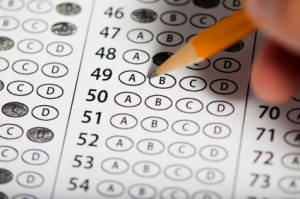
 Choosing a college can be a huge decision for anyone looking to further their education. There are several different very important factors when it comes to picking a college. Choosing a major and deciding on the location and school itself are essential, but the steps to getting into college are much more involved. Students need to know how to apply, what paperwork must be completed, and more importantly, how to pay for their new education. When making such a life changing decision, it is important to understand how the world of higher education works. Thorough research and having a full comprehension of the college application process can make your decision much easier.
 A student’s success in college is dependent on a number of important factors that must be learned and put into use on a routine basis. Time management, good study habits, note taking, and the ability to properly prepare for and take tests are crucial to the learning process and are often the key for even the most successful of students. Time management and good study habits will help students to be more organized, reduce procrastination and increase productivity. Students with good studying habits are more focused and know how and when to study for the best results. To get the most out of studying a student must first understand how to take accurate notes during lectures or while conducting research. Even when the previous factors have been met, students must also know how to prepare for and take tests.
 Many students don’t think about financially planning for their education before they graduate from high school. Unless they’ve been managing their own money and working, students don’t know how much it costs to live—much less, the cost of a college education. This doesn’t include the cost of owning and operating a car, filling it with gas at current prices or paying to have it maintained. In today’s current market, a college education can cost as much as it does to purchase a home. When it comes to planning a college education, consider searching for grant and scholarship opportunities to help defray these costs.
